Best Dog Foods for Hypothyroidism
Searching for the best dog food for hypothyroidism usually starts with a hopeful question: can the right diet fix the thyroid? It can’t — and saying that upfront is what separates this guide from most product roundups. Canine hypothyroidism is managed with daily thyroid hormone prescribed by your veterinarian; the honest nutritional job is narrower but still powerful: controlling the weight gain and coat problems the condition causes, and timing meals so they don’t interfere with the medication. This guide covers the condition itself, the diet’s genuinely supportive role, what to avoid, and food options worth discussing with your vet — built on guidance from Cornell University’s veterinary college, the MSD Veterinary Manual, and our senior dog nutrition guide.
Key takeaways
- No food treats hypothyroidism — daily levothyroxine, prescribed and monitored by your vet, does. Nutrition’s real job is managing the weight gain and coat problems the condition causes.
- Feed for the target weight, not the current weight: favor high-protein, higher-fiber formulas, aim for 1–2% body-weight loss per week, measure everything (treats included), and reassess calorie needs after medication starts.
- Worth discussing with your vet: Royal Canin Satiety Support (veterinary diet with a specific fiber blend for fullness), Hill’s Science Diet Adult Perfect Weight (over-the-counter starting point with L-carnitine), Purina Pro Plan Weight Management, and Wellness CORE Healthy Weight.
- Medication timing beats menu choices — give the pill at the same time every day exactly as your vet directs, and keep soy, calcium, iron, and fiber-heavy treats away from pill time unless your vet says otherwise.
- Skip “thyroid-boosting” gimmicks: kelp, iodine boosts, and herbal thyroid blends have no evidence in dogs and can interfere with medication.
Can food treat hypothyroidism in dogs?
No. Hypothyroidism is treated with levothyroxine, a synthetic thyroid hormone your veterinarian prescribes and monitors with bloodwork for the rest of your dog’s life. Food cannot restart thyroid function or replace the medication — any product or supplement claiming to “boost the thyroid” or manage hypothyroidism without medication should be treated with deep skepticism.
Most cases of canine hypothyroidism are primary in nature — caused by the immune system destroying the thyroid gland — and the MSD Veterinary Manual names levothyroxine the thyroid hormone replacement compound of choice in dogs. Replacement therapy is, with few exceptions, lifelong. Cornell notes it is usually given twice daily to start, with a vet recheck and blood tests a few weeks after starting, then periodic monitoring for life. The good news: with accurate diagnosis and monitoring, the prognosis is good — energy typically returns within weeks.
Two rules that matter more than any food choice: give the medication exactly as your vet directs, and never adjust the dose yourself. Persistent symptoms despite treatment are a recheck conversation, not a diet experiment.
What hypothyroidism looks like — and why it’s mistaken for aging
The most common signs, as described by Cornell, are lethargy and dullness, weight gain without increased appetite, cold intolerance, and skin-and-coat changes: hair loss (often along the trunk, base of tail, and bridge of the nose), dry brittle coat, darkened skin, and recurrent skin or ear infections. Less common signs include digestive upset, a slow heart rate, and weakness.
Because these signs overlap heavily with normal aging, “he’s just getting old” is the assumption to avoid. Diagnosis comes from bloodwork interpreted alongside the clinical signs — Cornell lists total T4, free T4, and TSH measurement, plus thyroid autoantibody testing — not from observation alone. Hypothyroidism is most often diagnosed in middle-aged to older dogs, and Cornell lists breeds diagnosed most commonly as including Golden Retrievers, Boxers, Beagles, Cocker Spaniels, and English Setters. If your dog is one of these breeds and the signs fit, bloodwork — not a new bag of food — is the first step. Our senior health guide puts hypothyroidism in context with other manageable senior conditions.
The real nutritional job: steady weight management
A slowed metabolism is the central nutritional problem in hypothyroidism. Your dog burns fewer calories doing the same things, so the food amount that used to maintain weight now slowly adds pounds — weight gain “without increased appetite” is one of the classic signs. This matters more than it sounds: extra weight worsens joint stress, deepens lethargy, and can mask whether the medication dose is working.
The nutritional strategy is straightforward:
- Feed for the target weight, not the current weight. Your vet can set a goal; the feeding guide on the bag should be read against that number.
- Favor high-protein, higher-fiber formulas. Protein preserves lean muscle during weight loss; fiber promotes fullness so a dog eating fewer calories doesn’t feel starved. Our high-fiber food guide explains the fiber side in more depth.
- Aim for slow, steady loss. Roughly 1–2% of body weight per week is the safe range for dogs — faster is not better.
- Measure everything. Hypothyroid dogs are the classic case where “a scoop” drifts upward. Use a measuring cup, and count treats in the daily total.
- Reassess after medication starts. Once levothyroxine restores normal metabolism, calorie needs often rise again — the amount that caused weight loss can become the new maintenance amount. Your vet will guide adjustments at recheck bloodwork.
Iodine, soy, and goitrogens: what actually matters
This is where most online advice goes wrong, so let’s be precise. Iodine is the mineral the thyroid uses to build thyroid hormones — but complete commercial dog foods already contain adequate iodine, and PetsRadar’s veterinary explainer notes that dietary iodine deficiency and congenital hypothyroidism are extremely rare in dogs. There is no reason to hunt for a “low iodine” dog food for a hypothyroid dog, and no evidence it would help. The real iodine risk runs the other direction: kelp and other “thyroid support” supplements add extra iodine that can interfere with thyroid management — ask your vet before adding anything iodine-containing.
Soy is the other confusion. Soy contains goitrogens — compounds that can interfere with thyroid function in very large amounts — but the American Thyroid Association’s position, as summarized on soya.be, is that soy does not cause hypothyroidism; the practical issue is that soy can interfere with the body’s ability to absorb thyroid replacement medication. The same logic applies to heavily soy-based treats given right at pill time. The fix isn’t a soy-free diet — it’s keeping medication and meals on the consistent schedule your vet sets. In the normal amounts found in processed dog food, goitrogenic ingredients (including cruciferous vegetables like kale and broccoli) are not something a hypothyroid dog owner needs to fear.
Medication timing beats menu choices
Here’s the food detail that genuinely affects treatment, and almost no product roundup mentions it: levothyroxine absorption can be reduced by food. A University of Minnesota veterinary pharmacology reference notes that food can reduce the bioavailability of L-thyroxine in dogs, and the MSD Veterinary Manual advises that if the medication must be given with food, it should be given the same way on blood-sample days, since consistency keeps the readings meaningful.
The practical takeaway is simple: follow your veterinarian’s instructions on when to give the pill relative to meals, and keep the routine identical every day — same time, same relation to feeding. In human medicine, Mayo Clinic notes that soy, calcium, iron, and fiber can also interfere with levothyroxine absorption — the same reason to keep supplements and dairy-heavy treats away from pill time unless your vet says otherwise. A consistent pill routine is worth more than any food switch.
What to look for on the label
With medication handled by your vet, the food’s job is weight control and coat support. Look for:
- A weight-management formulation. Foods designed for healthy weight carry more fiber and moderate fat with protein held high — exactly the profile above.
- Protein held high, fat controlled. Hypothyroid dogs gain on fewer calories; protein protects muscle while calories come down.
- L-carnitine on the label. This amino-acid compound supports fat metabolism and is a staple of weight-control formulas. Supportive, not a treatment.
- Omega-3 and omega-6 fatty acids. Hypothyroid coats tend to be dry and thin; omegas from fish oil support skin and coat quality while the medication does the deeper work. Note that full coat regrowth after treatment can take several months — Cornell says skin and haircoat improvement is the slowest change — so don’t judge a food switch in two weeks.
- A complete-and-balanced statement. Any food carrying an AAFCO complete-and-balanced statement already meets the nutrient minimums, including iodine; “thyroid-specific” marketing adds nothing veterinary.
- No “thyroid-boosting” gimmicks. Kelp, iodine boosts, and herbal thyroid blends lack evidence in dogs and can interfere with medication.
On grain-free: the thyroid condition itself doesn’t dictate grain-free versus grain-inclusive. Choose on overall nutritional quality and weight goals — and note that legume-heavy grain-free diets remain part of an ongoing DCM discussion, worth raising with your vet for a senior dog.
Foods worth discussing with your vet
Honest note: Hands-on feeding trials with real dogs are planned but haven’t happened yet, so this section is built on label and specification analysis plus other publications’ and owners’ reported findings — explicitly cited, never presented as our own testing. None of these treats hypothyroidism; all are supportive weight-management choices to discuss with your vet.
Royal Canin Satiety Support (veterinary diet). A vet-directed weight-loss formula built around high protein plus a specific fiber blend for fullness — the profile hypothyroid weight gain calls for. It requires a vet’s direction, which is appropriate: the owners with the strongest reported results used it under one. On Petco, the dry formula holds a 4.5-star overall rating with 234 of 308 reviewers (76%) recommending it. On Chewy, one verified-purchase reviewer (Margaret, Oct 2025) reported that their dog, on thyroid medication, lost 47 lbs in under two years on this food — a single owner’s result, not a guarantee, but exactly the scenario this article is for; another Chewy reviewer reported their 14–15-year-old pug losing about 9 lbs within 5 months. Worth discussing with your vet when an over-the-counter food isn’t moving the needle.
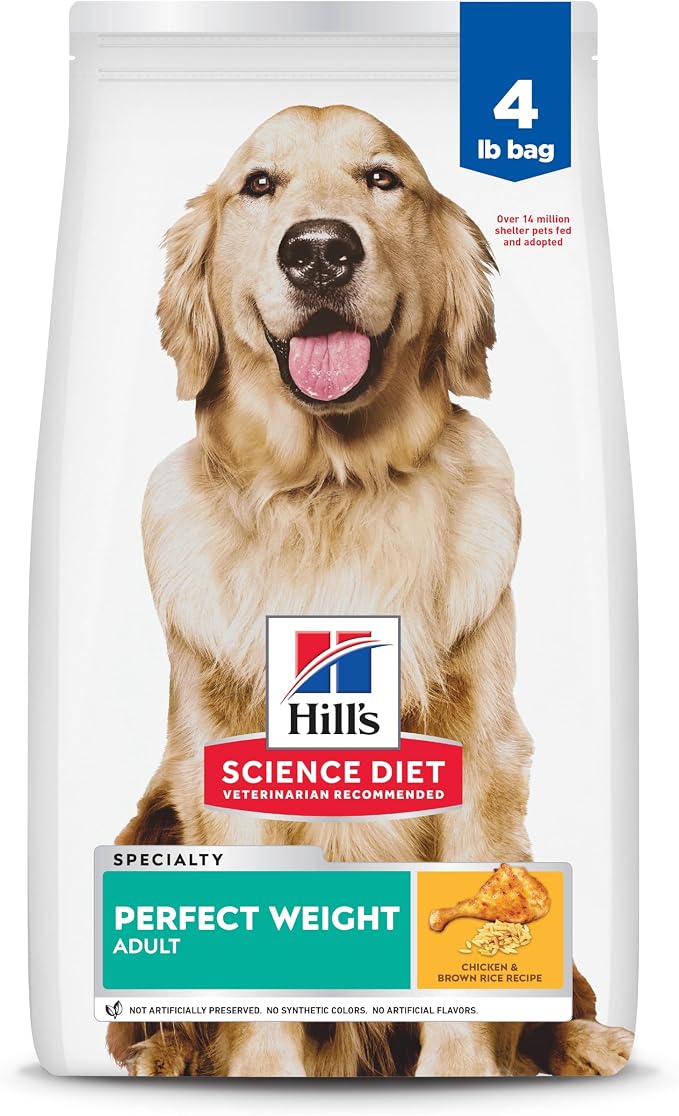
Hill’s Science Diet Adult Perfect Weight. A weight-management formula built around the high-protein, higher-fiber profile hypothyroid dogs need, with L-carnitine for fat metabolism. A sensible over-the-counter starting point for the hypothyroid dog that’s gaining.
Purina Pro Plan Weight Management. Another protein-forward weight-control option with live probiotics and prebiotic fiber. Widely available and mid-priced for the long feeding durations weight programs require. Best Pets Choice’s 2026 roundup of this category reported its sibling Complete Essentials line at 4.6/5 from 16,900+ Amazon ratings — an indicator of the line’s consistency, not a thyroid claim.

Wellness CORE Healthy Weight. A meat-first, reduced-fat recipe with probiotics and no by-products, for owners who want a premium-leaning label in a weight-control formula. Best Pets Choice reported it at 4.5/5 from 1,700+ Amazon ratings, noting its 42% protein with fat cut by 25% versus the brand’s original recipe — the muscle-preserving, calorie-cutting combination weight loss depends on.

Whichever you choose, the feeding amount matters more than the brand: even the best weight-management food fails if portions creep.
Treats, routine, and tracking progress
Most hypothyroid weight-loss plans fail on treats, not meals. Keep treats to around 10% of daily calories or less, and count them in the total — the extra weight worsens joint stress, which matters doubly for a slowing senior dog. Two measured meals a day beats free-feeding for weight control. Weigh your dog monthly on the same scale, and keep a simple log of weight, energy, and coat condition between vet visits; it gives your vet better data than memory. Bring your exact feeding amounts — food plus treats — to every recheck: if weight is still climbing despite careful feeding, that can signal the dose needs review, and your vet adjusts based on bloodwork, not on how the dog looks.
A senior-dog note
Hypothyroidism is most often diagnosed in middle-aged to older dogs, and the overlap with normal aging is what makes it tricky — the slowing down, the weight gain, the thinning coat. Layer the thyroid plan onto senior feeding basics rather than replacing them: our senior dog nutrition guide covers age-related adjustments, and our senior food guide compares formulas built for aging bodies. Keep recheck appointments even when your dog looks great — the medication is lifelong, and bloodwork keeps the dose right as your dog ages.
FAQ
Can diet alone manage my dog’s hypothyroidism?
No. Thyroid hormone replacement is the treatment; diet manages the secondary issues — weight gain and coat quality. Skipping medication in favor of dietary changes leaves the underlying hormone deficiency untreated, and no food can restart thyroid function.
Should I look for a low-iodine dog food?
No — this is one of the most common pieces of bad advice on this topic. Complete-and-balanced commercial foods already contain the iodine a dog’s thyroid needs, and dietary iodine deficiency is extremely rare in dogs. The real iodine concern is oversupplementation: kelp and “thyroid support” products can interfere with thyroid management.
Can I add kelp or a thyroid-support supplement?
Ask your vet first — and expect a cautious answer. Extra iodine can disrupt thyroid management, herbal thyroid blends are unregulated and unproven in dogs, and anything given near pill time can interfere with levothyroxine absorption.
Does soy in dog food worsen hypothyroidism?
Soy doesn’t cause hypothyroidism, but it can interfere with levothyroxine absorption. In practice that means keeping the medication routine consistent and separated from meals as your vet directs — not hunting for a soy-free diet. Normal amounts of soy and cruciferous vegetables in processed dog food are not a concern.
Do I need a prescription diet for my hypothyroid dog?
Not necessarily. An over-the-counter weight-management formula with high protein, higher fiber, and L-carnitine covers most cases. A veterinary weight-loss diet like Royal Canin Satiety Support is worth discussing with your vet when weight won’t budge on an OTC food, or when significant loss is needed.
Why is my dog still gaining weight on medication?
Possibly portions and treats have drifted, but check with your vet first: persistent weight gain can mean the dose needs adjustment, or that calorie needs have changed. Bring your exact feeding amounts (food plus treats) to the recheck — dose changes are based on bloodwork, never adjusted at home.
Is hypothyroidism curable?
It’s manageable, not curable — most dogs take daily thyroid hormone for life and do very well on it. With accurate diagnosis and monitoring, Cornell gives it a good prognosis.
The bottom line
Medication treats hypothyroidism; food manages its consequences. Keep your dog lean with a high-protein, fiber-rich weight-management formula, support the coat with omegas, keep medication and meals on your vet’s schedule, and skip the “thyroid-boosting” gimmicks. Do that — and keep every recheck appointment — and most hypothyroid dogs live completely normal lives.