
Best High-Fiber Dog Food for Anal Glands & Weight
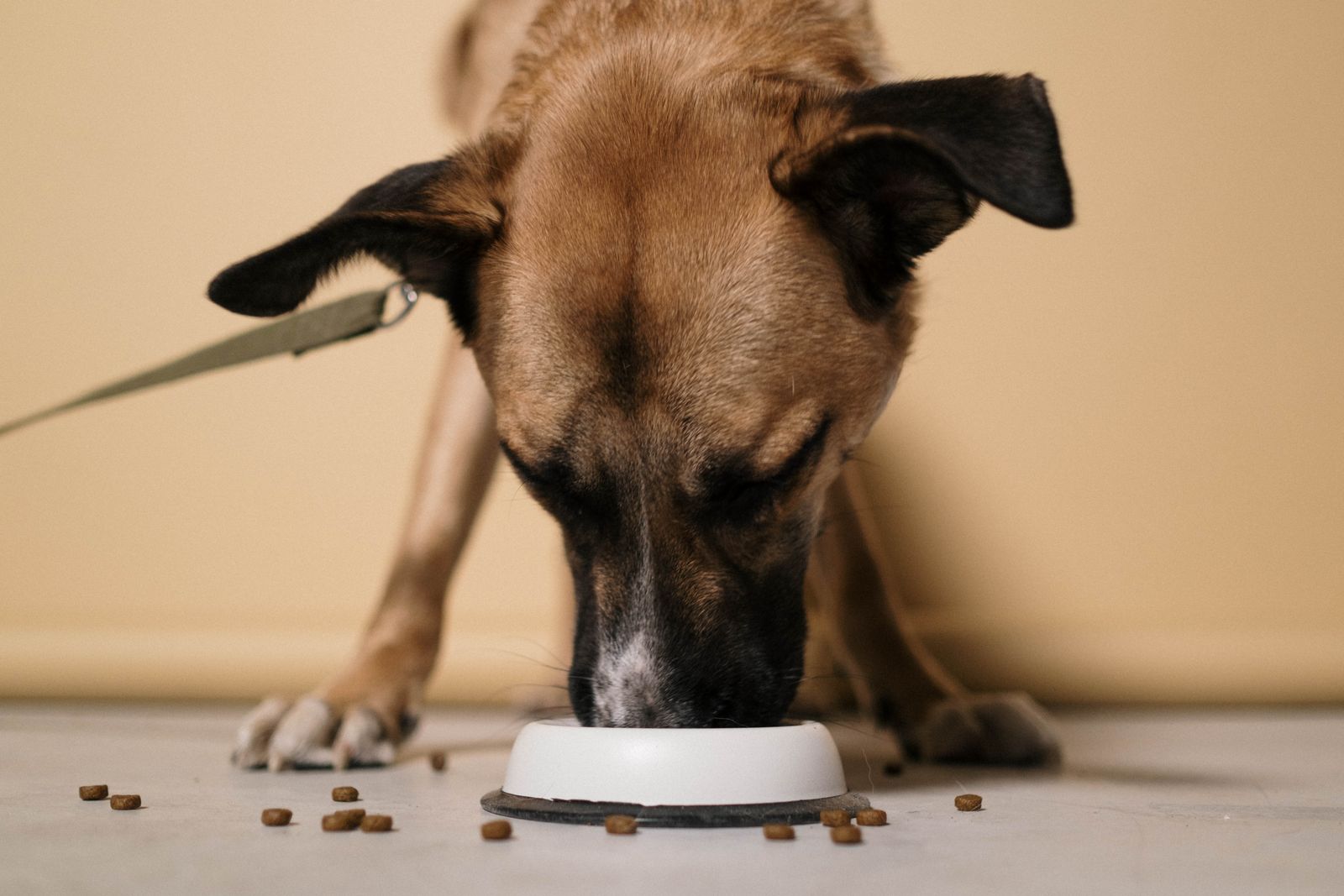
Fiber is behind some of the most common dog-food searches — “high fiber dog food for anal glands,” “fiber for weight loss,” “fiber for diabetes.” In the right amount and form, it firms stools so anal glands empty naturally, helps overweight dogs feel full on fewer calories, and feeds beneficial gut bacteria. In the wrong amount, or for the wrong dog, it just makes more poop — or dilutes calories a dog desperately needs.
This guide does what most fiber articles skip: it explains the mechanisms, shows you how to read the label honestly — the crude-fiber number is more misleading than most owners realize — and compares foods and supplements on label specifications (hands-on feeding trials are planned but haven’t happened yet). If fiber is one piece of a broader feeding plan for an aging dog, start with our senior dog nutrition guide and come back here for the fiber deep dive.
Key takeaways
- The crude-fiber number on the label is a maximum that ignores soluble fiber entirely — treat it as a rough floor for insoluble fiber, not a measure of total fiber.
- Match the fiber type to the problem: insoluble-heavy fiber for anal gland support (bulkier, firmer stools squeeze the glands), fermentable soluble fiber (inulin, FOS, beet pulp) for gut health.
- Never compare a dry food’s fiber percentage directly with a wet food’s — convert to a dry-matter basis. Hill’s w/d canned lists ~7% fiber as fed but lands around 22.7% on a dry-matter basis.
- Typical bands: maintenance foods ~2–5% crude fiber max, weight-management formulas ~8–12%, veterinary therapeutic diets well over 10% (which belong under veterinary supervision).
- Worth considering: Royal Canin Gastrointestinal High Fibre (veterinary diet, well over 10% crude fiber), Hill’s Prescription Diet w/d Multi-Benefit (~22–23% dry-matter fiber), Nutro Natural Choice Healthy Weight (11% max crude fiber), and Glandex Soft Chews for anal glands (4.6 stars across ~1,470 Petco reviews).
What does fiber actually do in a dog’s body?
Fiber is the part of plant ingredients a dog’s own enzymes can’t digest — it passes through largely intact, and that journey is where the benefits happen. Insoluble fibers (cellulose, wheat bran, peanut hulls) don’t dissolve in water; they travel through nearly unchanged, adding bulk that keeps things moving. Soluble fibers (pectins, gums, inulin from chicory root) dissolve, slow digestion, and pull water into the gut.
Tufts veterinary nutritionists add a second dimension in their fiber guide: fermentability — how readily gut bacteria break a fiber down. Fermentable soluble fibers feed beneficial bacteria, which convert them into short-chain fatty acids that nourish the colon lining (the “prebiotic” fibers). The trade-off: too much highly fermentable fiber produces excessive gas. And many common sources — beet pulp, psyllium, oat bran — are mixtures of both types.
When might a high-fiber diet help?
- Scooting or anal gland trouble. The biggest driver of this search. Firmer, bulkier stools press against the anal glands during defecation, helping them empty naturally instead of filling up. A peer-reviewed survey of veterinary approaches to anal sac disease notes high-fiber diets are recommended for preventing recurrence. But fiber supports healthy glands — it doesn’t treat infection or impaction, which need a vet.
- Weight management. High-fiber, lower-calorie foods let a dog eat a satisfying volume while taking in fewer calories — fiber takes up space without adding usable energy.
- Blood sugar steadiness. Soluble fiber slows glucose absorption after meals, which is why vets sometimes build fiber into diabetic dogs’ diet plans. Don’t adjust a diabetic dog’s fiber without your vet.
- Digestive regularity. Soluble fiber can draw water into the intestine to ease constipation; insoluble fiber absorbs excess water and firms loose stools. Persistent irregularity is a vet visit, not a food experiment.
What fiber won’t do: cure an infected or impacted anal gland, fix diarrhea with an underlying medical cause, or substitute for a diagnosis. If scooting comes with swelling, bleeding, discharge, or obvious pain, skip the fiber experiment and call your vet.
Soluble vs insoluble fiber: which does what?
For owners, the practical question is which kind matches the problem. For anal gland support, insoluble-heavy fiber is what you want — bulk makes bigger, firmer stools that squeeze the glands on the way out.
For gut health, fermentable soluble fiber is the star. Inulin, FOS, and beet pulp feed beneficial bacteria. A 2022 review in the Journal of the American Veterinary Medical Association describes how fiber’s effects on stool transit and volume come partly from bacterial metabolites — short-chain fatty acids and secondary bile acids — not just physical bulk.
You can’t fine-tune this from the label, though: the guaranteed analysis gives a single crude-fiber number with no soluble/insoluble split. Read the ingredient list instead — beet pulp, pumpkin, psyllium, FOS, inulin, or chicory root signal functional, partly-fermentable fiber; “powdered cellulose” signals bulk-focused fiber.
The crude-fiber number on the label is misleading
This is the single most useful thing to know when shopping for high-fiber food, and almost no buying guide mentions it: the “crude fiber” figure on a pet food label is a maximum, not an amount — and it doesn’t include any soluble fiber at all.
That’s the chemistry of the lab test. Tufts’ Petfoodology explains it plainly: crude fiber measurement captures most of the insoluble fiber and none of the soluble fiber, and because it’s a maximum, the actual fiber in the bag could be much lower. Total dietary fiber (TDF) — the method used for human foods — measures both accurately, but it’s not required of pet food companies, so it’s rarely available.
The consequence: two foods with identical crude-fiber numbers can behave very differently in your dog’s gut. Treat crude fiber as a rough floor for insoluble fiber, not a measure of total fiber.
Comparing fiber fairly: the dry-matter trick
A second labeling trap: you can’t compare a dry food’s fiber percentage directly with a wet food’s. Label numbers are “as fed” — they include the food’s water. A wet food at 7% crude fiber sounds far less fibrous than a kibble at 11%, but the wet food is ~75–80% water. Convert to a dry matter basis to compare fairly: divide the fiber percentage by the food’s dry matter (100 minus the moisture percentage), then multiply by 100. Dogster’s buying guide shows this math for its picks — Hill’s w/d canned lists ~7% fiber as fed but lands around 22.7% on a dry matter basis, comparable to the dry version.
How much fiber is “high fiber”?
There’s no regulatory definition of “high fiber” for dog food — the honest answer is comparative:
- Standard maintenance foods typically list around 2–5% crude fiber (maximum).
- Weight-management formulas usually sit around 8–12% crude fiber max — roughly double a standard food. K9 of Mine’s guide comparing eight products on label data found most solid options clustering in this band.
- Veterinary therapeutic diets go much further — Royal Canin Gastrointestinal High Fibre lists well over 10% crude fiber. Very high fiber dilutes calories, which is why these diets belong under veterinary supervision.
When high fiber is the wrong call
Bad advice does real harm here, and no competitor roundup covers these cases. Underweight seniors or dogs losing muscle need calorie-dense nutrition; fiber works directly against that. Let body condition, not age, drive the decision — see our senior feeding guide.
- Dogs with anal sac masses or tumors. VCA Animal Hospitals notes that stool-bulking diets — high-fiber included — should be avoided when a mass is present.
- Puppies and dogs with diagnosed conditions. Growing dogs need nutrient density, not dilution. And with diabetes, kidney disease, pancreatitis, or any GI diagnosis, the fiber decision belongs to your vet, not a buying guide.
What to look for in a high-fiber food
- Named, functional fiber sources. Beet pulp, pumpkin, psyllium husk, brown rice, oatmeal, and FOS/chicory root have track records. Vague fiber with no source is a weaker sign.
- Protein still first. Fiber should supplement a meat-based recipe, not replace protein — a named animal protein should lead the ingredient list.
- Calories matched to the goal. For weight loss, lower calorie density is the point; for anal gland support in a lean dog, you don’t want the food to slim them down as a side effect.
- A transition plan. Increasing fiber abruptly causes gas and loose stools. Shift over 7–10 days — 25% new food, then 50/50, then 75/25 — easing back a step if stools loosen.
Foods and supplements worth considering
How we picked: Hands-on feeding trials with real dogs are planned but haven’t happened yet. The products below are compared on label and specification analysis only — not on test results. Where another publication’s findings or owner reviews informed a pick, it’s attributed.
Royal Canin Gastrointestinal High Fibre (veterinary diet). The reference point for genuinely high fiber: well over 10% crude fiber, built on vegetable fibers, beet pulp, psyllium husks and seeds, plus FOS prebiotics — with ~23% protein so it isn’t just roughage. Your vet should be the one to recommend it, typically for fiber-responsive digestive issues. The honest trade-off: it’s a clinical tool, not an everyday food for a healthy dog.
Hill’s Prescription Diet w/d Multi-Benefit (veterinary diet). ~22–23% fiber on a dry matter basis in both canned and dry forms, formulated for weight, glucose, and urinary management together. At Puppy Growth Calculator, veterinary advisor Dr. Jennifer Coates, DVM, selected w/d Multi-Benefit as her best overall for its breadth across those conditions — their assessment, not ours.

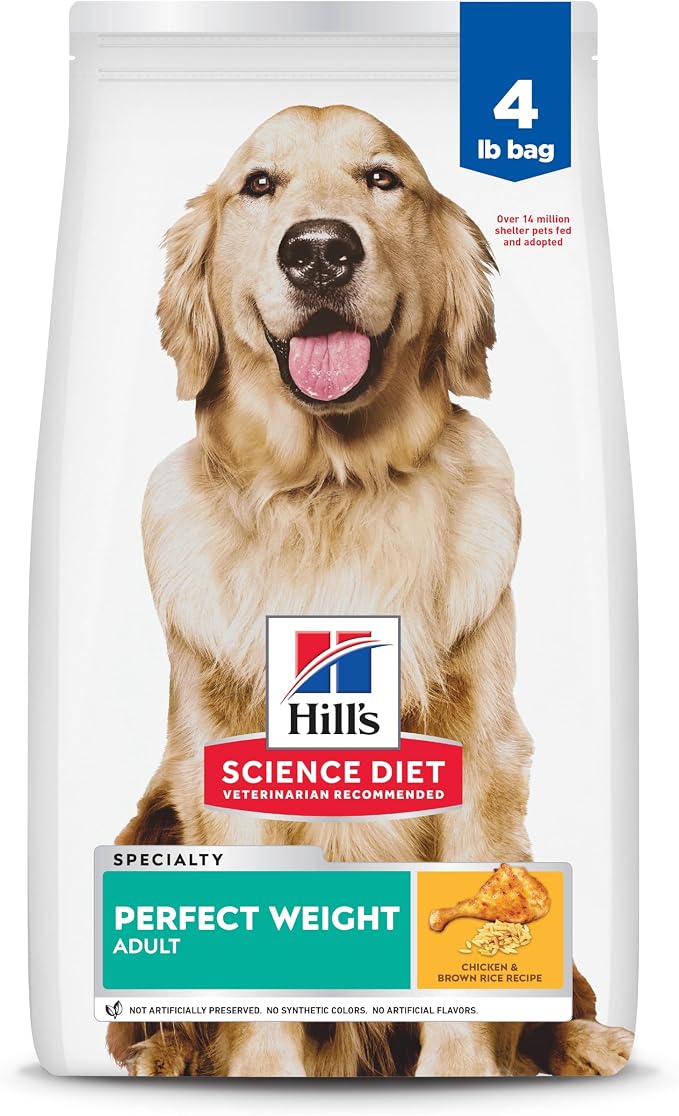
Hill’s Science Diet Adult Perfect Weight (over the counter). A weight-management formula that uses higher fiber to promote satiety while keeping protein up for lean muscle — the right call when the goal is slimming a chunky dog rather than treating a GI condition.
Nutro Natural Choice Healthy Weight (over the counter). K9 of Mine rated this their best overall after comparing eight products on label data: 11% max crude fiber from rice bran, powdered cellulose, beet pulp, and pumpkin, with farm-raised chicken first. (Their review, their pick.)

Budget-friendly options. When cost is the constraint, K9 of Mine highlights Diamond Naturals Light as an affordable high-fiber kibble, and Puppy Growth Calculator’s budget pick is Natural Balance Fat Dogs — both weight-management formulas worth checking against the bands above.
Glandex Soft Chews (Vetnique Labs). A targeted supplement rather than a food: a fiber blend built on pumpkin seed powder, granulated pumpkin seed, and apple pectin, plus probiotics, digestive enzymes, and omega fatty acids, dosed by weight. Owner reviews are strong for this category: on Petco’s listing (roughly 1,470 reviews at last check), the chews average 4.6 stars and 82% of reviewers say they’d recommend them, with most describing less scooting and fewer vet visits for gland expression. Owner reports, not clinical evidence — but a meaningful signal, and a reasonable add-on for the chronic scooter whose vet has ruled out infection.

Plain canned pumpkin. The simplest fiber topper: plain pumpkin purée (not pie filling). Tufts’ table puts canned pumpkin at just 0.4g of total dietary fiber per tablespoon — far less than concentrated psyllium (3.5g) — so it’s a gentle nudge, not a real fiber intervention. Many vets suggest it for mild stool-firming, and it’s a cheap first experiment. Ask your vet about an appropriate amount for your dog’s size.

A senior-dog note
Fiber needs the most individual judgment in senior dogs. A slightly higher-fiber food can help the older dog gaining weight as activity drops — but a senior losing weight or muscle needs calorie-dense nutrition, and fiber works against that. Seniors with underactive thyroids also gain weight easily, so check with your vet before layering a high-fiber approach onto a thyroid-managed dog (see our hypothyroidism feeding guide).
FAQ
What is a good source of fiber for dogs?
Pumpkin, beet pulp, psyllium husk, brown rice, oatmeal, carrots, and green beans. On commercial labels, look for beet pulp, psyllium, FOS, or chicory root — functional fibers, not just fillers.
What’s the difference between soluble and insoluble fiber?
Insoluble fiber (cellulose, wheat bran) adds bulk and keeps things moving; soluble fiber (pectins, gums, inulin) dissolves, slows digestion, and feeds beneficial gut bacteria. Many real-world sources — beet pulp, psyllium, oat bran — are mixtures of both.
Can I just add fiber to my dog’s current food?
Often, yes — plain canned pumpkin or a vet-recommended supplement can top up a working food. But keep expectations honest: Tufts notes vegetables like pumpkin are “variable and typically low” in fiber compared to concentrated supplements. For meaningfully more fiber, a formulated diet is more precise.
Will high-fiber food help my dog’s anal glands?
It can support healthy glands via firmer, bulkier stools that help them empty naturally. It won’t treat an infected or impacted gland — those need veterinary care — and VCA notes stool-bulking diets should be avoided if an anal sac mass is present. Fiber is maintenance for healthy glands, not medicine for sick ones.
Can too much fiber be harmful?
Yes. Excessive fiber can reduce absorption of protein, fat, and minerals, cause gas and bloating, and drive weight loss in dogs that can’t afford it. Very high fiber is a tool for specific goals — not a default upgrade.
How do I switch to a higher-fiber food?
Gradually, over 7–10 days: roughly 25% new food for a few days, then 50/50, then 75/25. If stools loosen or gas spikes, hold at the current ratio before advancing. If nothing changes a month after the switch, revisit the plan with your vet.
Is grain-free food low in fiber?
Not necessarily — many grain-free foods use peas, lentils, and chickpeas, which contribute fiber. Fiber level is a formulation choice, not a grain-free divide. And the crude-fiber number doesn’t include soluble fiber at all, so read labels with the caveats in the labeling section above.
The bottom line
Fiber is a precision tool: the right amount and type firms stools, supports anal glands, and aids weight control; too much just dilutes nutrition. Carry away two things: the label’s crude-fiber number is a maximum that ignores soluble fiber entirely, so shop by ingredients and compare on a dry-matter basis. And match the fiber to the dog — a chunky scooter and a frail senior need opposite answers. For the bigger feeding picture, circle back to our senior dog nutrition guide.