
Best Dog Foods for American Bully
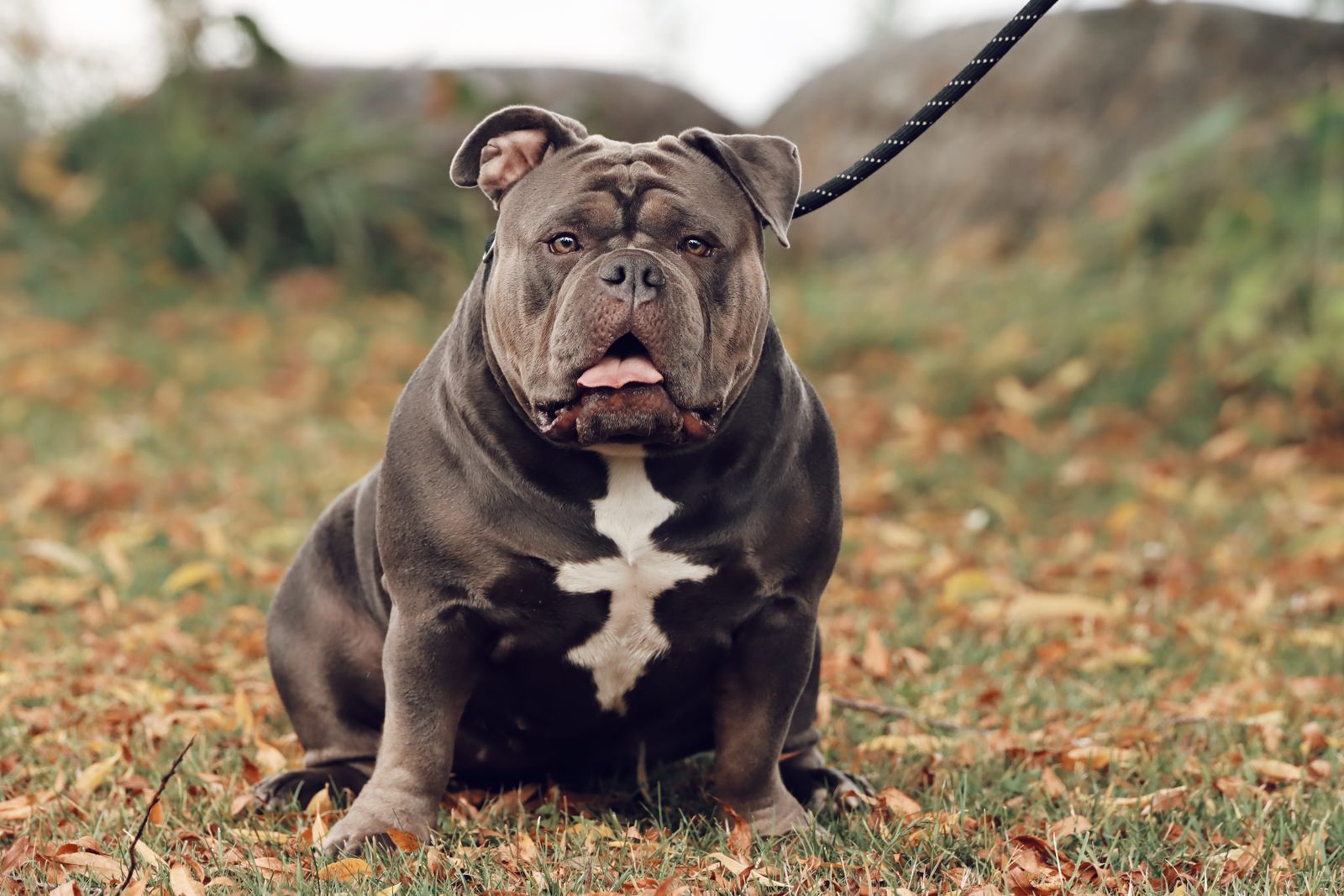
The American Bully is a study in contrasts: a dog built like a weightlifter, with the metabolism of a couch potato if you’re not careful. Feeding one well means holding two ideas at once — enough quality protein to maintain that muscular build, and enough portion discipline to keep a naturally heavy dog lean. This guide covers the nutritional targets that matter for the breed type, the marketing claims that don’t, and which formulas fit — framed for the dog’s whole life, because Bullies age like other large, heavy breeds: faster than you’d expect. For the bigger picture, see our senior dog nutrition guide.
Key takeaways
- Feed 25–30% crude protein from named animal sources (beef, chicken, fish, or their meals) and 12–20% crude fat matched to activity, with portions anchored to your dog’s ideal weight — and ignore the kidney myth: high protein doesn’t damage healthy dogs’ kidneys.
- There is no such thing as “bully-specific” food: AAFCO has no breed-specific nutrient profile, so judge every bag on protein, fat, calorie density (kcal/cup), and the AAFCO statement — the rest is marketing.
- The breed’s biggest nutrition problem is overfeeding, not underfeeding: Bullies are easy keepers, and a 90-pound Bully eating 4 cups of a 535 kcal/cup formula gets over 2,100 kcal — measure every meal, learn body-condition scoring, and weigh monthly.
- Formulas compared on label and spec: VICTOR Hi-Pro Plus (30/20, ~405 kcal/cup) for active Bullies; Bully Max 30/20 (~535 kcal/cup) for hard keepers and very active dogs; Bully Max 25/11 (25/11, 415 kcal/cup) as the smarter pick for the common case — a Bully that needs to lose weight; Diamond Naturals as the budget route. Hepper’s testers named Taste of the Wild Wetlands best overall in 2026 (their testing, not ours). No hands-on feeding trials yet.
- Skin issues are mostly environmental, not food: the only reliable diagnosis is an elimination-challenge trial with your vet (one novel or hydrolyzed protein, at least 8 weeks), and omega-3s are the best-supported nutritional lever for skin. On grain-free: the DCM association tracks with pulse-heavy diets (peas, lentils, chickpeas), not with the mere absence of grains.
What should an American Bully actually eat?
Aim for 25–30% crude protein from named animal sources (beef, chicken, fish, or their meals), 12–20% crude fat depending on activity level, and portions matched to your dog’s ideal weight — not their current one. Look for an AAFCO statement for adult maintenance or all life stages, and expect to adjust as your Bully ages.
Those protein numbers are well above the legal floor. AAFCO sets the minimum at 18% crude protein (dry-matter basis) for adult maintenance and 22% for growth — figures cited by PetfoodIndustry, quoting Banfield’s Dr. Lily Ock, who notes that “feeding a healthy dog above the recommended protein amount will not result in true toxicity.” So the kidney-damage fear around high-protein food is a myth for healthy dogs; the real question is whether your individual dog needs the extra calories that usually come with it.
Is there really such a thing as “bully-specific” dog food?
No — and this is the claim competitors almost never challenge. AAFCO has no breed-specific nutrient profile, so there is no official standard a food must meet to be “for Bullies.” What brands like Bully Max sell is a standard high-protein, high-calorie adult formula (their 30/20 is 30% protein, 20% fat, ~535 kcal/cup, per Bully Max’s own nutrition tables) dressed in bully branding. Judge every food on protein, fat, calorie density, and the AAFCO statement — the rest is marketing.
How much protein does a Bully need to hold muscle?
For most adult Bullies, 25–30% crude protein from animal sources is the practical target — enough amino acids for muscle repair without loading a couch companion with unneeded calories. Senior Bullies arguably need the upper end: aging dogs lose muscle more easily, so protein should stay high even as calories come down.
Where protein comes from matters more than the headline number. Named meats and meat meals (beef meal, chicken meal, fish meal) supply complete amino acid profiles; plant-boosted proteins can inflate the crude protein figure with less usable nutrition. And watch the calorie math: a 90-pound Bully eating 4 cups of a 535 kcal/cup formula gets over 2,100 kcal — plenty for a working dog, far too much for a house pet.
Calories and weight: the half most owners get wrong
Here’s the uncomfortable truth most “best food for Bully” lists skip: the breed’s biggest nutrition problem isn’t getting too little food — it’s getting too much. Bullies are famously easy keepers with hearty appetites, and extra weight on a 70–100 lb frame multiplies stress on hips and elbows. Learn to read body condition: you should feel the ribs under a light fat cover and see a visible waist from above and the side.
Start from the bag’s feeding guide for your dog’s ideal weight, measure every meal with a real measuring cup, and weigh the dog monthly. If weight creeps up on reduced portions, suspect too many treats, table scraps, or an underactive thyroid — talk to your vet; our guide on dog foods for hypothyroidism explains how thyroid-driven weight gain changes the feeding math. For always-“starving” dogs, a higher-fiber formula adds satiety without calories (see our high-fiber dog food guide). Portions fix more weight problems than any formula swap.
Reading the label: a quick checklist for Bully owners
Apply this to any bag, bully-branded or not: named animal protein or meat meal first (beef, chicken, fish); crude protein 25–30% from animal sources; crude fat matched to activity (~12–15% for a calm house Bully, up to 20% for an active one); an AAFCO statement for adult maintenance or all life stages; calorie density in kcal/cup printed plainly — your portion-planning number; and, for heavy builds, added glucosamine/chondroitin and omega-3s as sensible supporting players. Skip foods that hide behind vague terms like “meat and bone meal” or lead with corn and unnamed by-products.
Skin issues and allergies: what nutrition can and can’t do
Bullies are overrepresented in the itchy-dog crowd, and food gets blamed more often than it deserves. Most recurring skin trouble is environmental (pollen, dust mites) or secondary infection — not food. The only reliable way to find out is an elimination-challenge diet trial run with your vet: one novel or hydrolyzed protein, nothing else crossing the dog’s lips, for at least eight weeks, with skin signs often improving by week five, according to VCA Animal Hospitals. VCA also warns that blood, saliva, and hair “allergy tests” are unreliable.
Second, omega-3 fatty acids from fish oil remain the best-supported nutritional lever for skin: they help rebuild the skin’s moisture barrier and moderate inflammation. A food with named fish ingredients or added fish oil covers this baseline. But no kibble “cures” allergies — a chronically itchy Bully with paw-chewing or ear infections needs a veterinary dermatology conversation, not a shopping one. Our food allergy guide walks through how vets actually diagnose the problem.
Grain-free, legumes, and the heart-health question
Bullies don’t need grain-free food — no breed does — but the heart question deserves a straight answer. The FDA’s investigation into diet-associated dilated cardiomyopathy (DCM) began in 2018, and the picture has sharpened since. As Tufts University’s Petfoodology summarized in June 2026, the association tracks with diets high in pulses — peas, lentils, chickpeas, dry beans — grain-free or not, not with the mere absence of grains. Early-caught cases can slowly improve when the diet changes.
Practical takeaway: if you feed grain-free, check that the formula isn’t simply replacing grains with a wall of peas and lentils, and make sure taurine precursors (methionine, cysteine) are adequate — animal-protein-rich foods generally cover this. Given the breed’s heart-disease predisposition, discuss any pulse-heavy diet with your vet, and report coughing, exercise intolerance, or fainting promptly.
Joint stress under a heavy frame
A Bully’s skeleton carries a powerlifter’s load on joints that dysplasia already threatens — and the single biggest nutritional lever is weight. Every extra pound multiplies force through hips and elbows, so lean body condition does more for joint health than any supplement on the label. Glucosamine, chondroitin, and EPA/DHA omega-3s are reasonable supporting ingredients for a heavy breed; they’re supportive, not therapeutic, and don’t reverse arthritis. If your Bully is stiff after rest or reluctant on stairs, that’s a vet visit — nutrition is the foundation, not the fix.
Formulas compared on label and spec
Honest note: Hands-on feeding trials with real dogs are planned but haven’t happened yet. Everything below is label and specification analysis — guaranteed analysis, ingredients, calorie density — plus owner-review data, not test results from this site.
VICTOR Hi-Pro Plus (30/20). 30% protein / 20% fat from beef, chicken, pork, and fish meals at about 405 kcal per cup, gluten-free, made in VICTOR’s own Texas facility, AAFCO all-life-stages. Suits active Bullies; for a sedentary dog it’s easy to overshoot, so measure carefully.

Bully Max 30/20. 30% protein, 20% fat, ~535 kcal per cup, no corn, wheat, soy, or poultry by-product meals, all life stages. Note from Chewy’s product Q&A: it contains sorghum and brown rice — not grain-free, despite the performance branding. Genuinely too rich for a low-activity dog; a legitimate pick for hard keepers and very active Bullies.
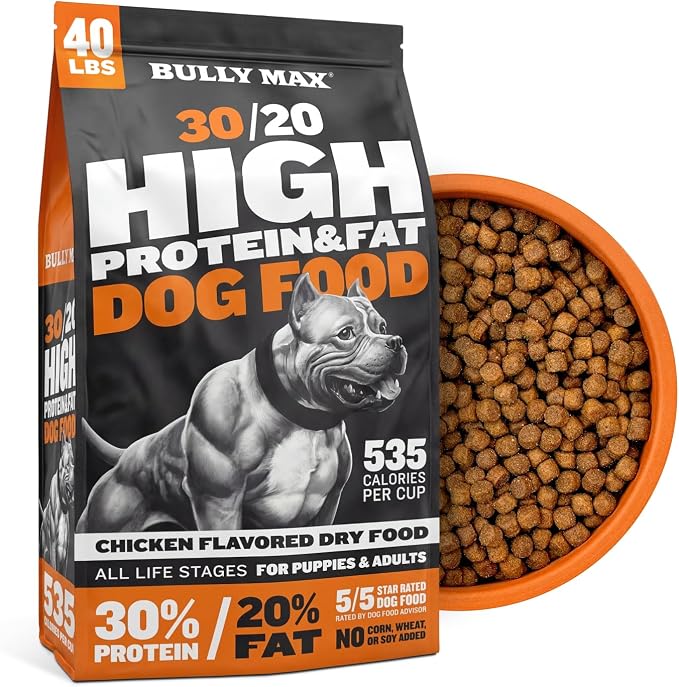
Bully Max 25/11. The interesting one: 25% protein with only 11% fat and 415 kcal per cup, marketed for lean muscle and weight management. For the far more common case — a Bully that needs to lose weight — this lower-fat profile makes more sense than the 30/20 most lists push.

Taste of the Wild Wetlands. In Hepper’s 2026 hands-on roundup, their testers named this their best overall pick for the breed, citing 32% protein from duck and chicken meals, chelated minerals, and probiotics at a competitive price (their testing is theirs, not ours). Hepper’s testers also flagged Victor Select as best value.
Diamond Naturals. A budget-friendlier route to meat-first, high-protein feeding with probiotics included. Bullies eat a lot, and a lower price per pound is a real consideration — solid guaranteed-analysis numbers without the performance-brand markup.

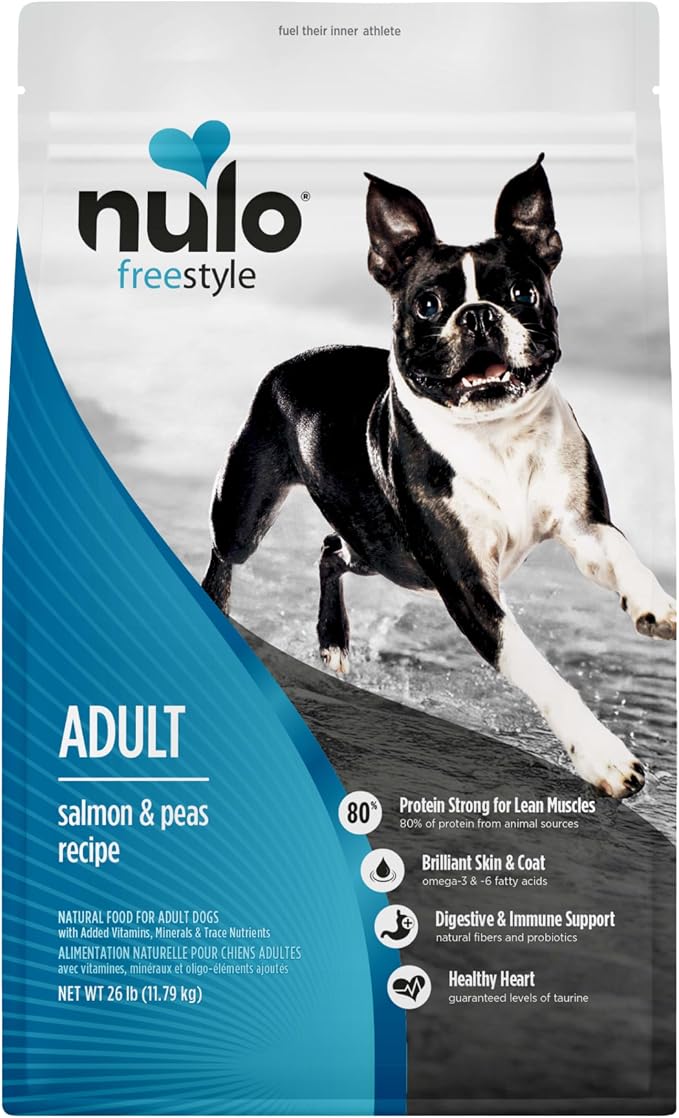
Nulo Freestyle. A high-meat, grain-free line (~30% protein, mostly from meat) with the BC30 probiotic for digestive support. A reasonable middle ground between budget and ultra-premium — though if you go grain-free, see the DCM section above and keep pulse content in check.
What owners actually report: review-mining
Owner reviews are the next-best signal — with the caveat that these are self-selected reviewers, not controlled tests. Across Chewy’s review pools, observed September 2026: VICTOR Hi-Pro Plus holds about 4.3/5 from roughly 4,000 ratings (72% positive on digestibility, 77% on palatability); multiple reviewers stress transitioning slowly to avoid digestive upset. Bully Max 25/11 sits at 4.4/5 from 208 ratings (85% positive on digestibility and palatability); recurring themes include successful weight loss and diarrhea when owners switch too fast. Bully Max 30/20 shows 4.6/5 from 30 ratings, but palatability scores lower at 71% positive. The consistent thread across all three: transition over 7–10 days minimum.
Feeding a Bully puppy, adult, and senior
Puppy (under ~12–18 months): feed a puppy or all-life-stages formula with controlled calcium for steady skeletal growth — rapid growth on an unbalanced diet is a joint risk in heavy breeds. Rich performance formulas are overkill for most pups.
Adult (roughly 2–7 years): 25–30% protein, fat matched to activity, portions anchored to ideal weight.
Senior (around 7–8+ for large, heavy breeds): metabolism slows while muscle loss accelerates, so the move is fewer calories, same or higher protein — not the old low-protein senior formulas. Keep protein up to defend muscle, and consider softer textures if teeth or appetite fade. Our best senior dog food guide details what changes at this stage, and the senior nutrition guide covers the full transition.
How we picked these formulas
Three inputs, and you should know all three: (1) label and specification analysis — guaranteed analysis, ingredient order, calorie density, and AAFCO statements; (2) aggregated owner-review data from retailers like Chewy, framed as observed review sentiment, not our findings; (3) veterinary and academic sources for the nutritional claims (AAFCO profiles, Tufts on DCM, VCA on allergy trials). Hands-on feeding trials with real dogs are planned for a future update. No manufacturer paid for placement, and there are no affiliate links in this article.
FAQ
Is high-protein food bad for an American Bully’s kidneys?
No — in healthy dogs, dietary protein doesn’t cause kidney disease; healthy kidneys metabolize and excrete excess protein without damage. If your dog has diagnosed kidney disease, that’s a vet-directed diet conversation, not a reason to avoid protein in a healthy Bully.
Is Bully Max just marketing, or is it actually good food?
It’s genuinely high-protein, calorie-dense kibble — the guaranteed analysis is real — but there’s nothing nutritionally “bully-specific” about it, since AAFCO has no breed-specific standard. Buy it for the specs (30/20 for hard keepers, 25/11 for weight management), not the branding.
How many cups should I feed my American Bully per day?
It depends on the food’s calorie density and your dog’s ideal weight and activity. A 90-lb adult at healthy weight typically needs roughly 1,600–2,000 kcal/day — about 3–4 cups of a 500 kcal/cup formula. Start from the bag’s guide for ideal weight, measure precisely, and adjust monthly on body condition.
Do American Bullies need grain-free food?
No. No breed needs grain-free, and many Bullies thrive on wholesome grains like rice, barley, or oatmeal. If you do choose grain-free, watch the pulse content (peas, lentils, chickpeas) given the research into diet-associated DCM, and discuss the choice with your vet.
When should my Bully switch to senior food?
Large, heavy breeds are typically considered senior around 7–8 years, but the switch is about changing needs, not birthdays: slowing metabolism, easier weight gain, muscle loss. When portions that used to maintain weight start adding pounds, or muscle tone softens, it’s time — our senior food guide explains what to change.
Should I add supplements to build my Bully’s muscle?
A complete, high-protein food already provides the building blocks — “muscle-building” dog supplements are largely unproven, and consistent exercise does the real work. The supplements worth discussing with your vet are omega-3s for skin and joint-support nutrients for a heavy frame, not muscle powders.
The bottom line
Feed the Bully in front of you: 25–30% quality protein, measured portions, and joint-aware nutrition for the heavy frame. For the common case — a house Bully drifting toward chunky — a moderate-fat formula like Bully Max 25/11 or a measured portion of VICTOR Hi-Pro Plus beats any “maximum bully” calorie bomb. And as your Bully’s muzzle grays, revisit the whole equation: our senior dog nutrition guide walks through keeping protein high while calories come down, so the muscle that defines the breed lasts into the senior years.