
Best Dog Ramps for Senior Dogs
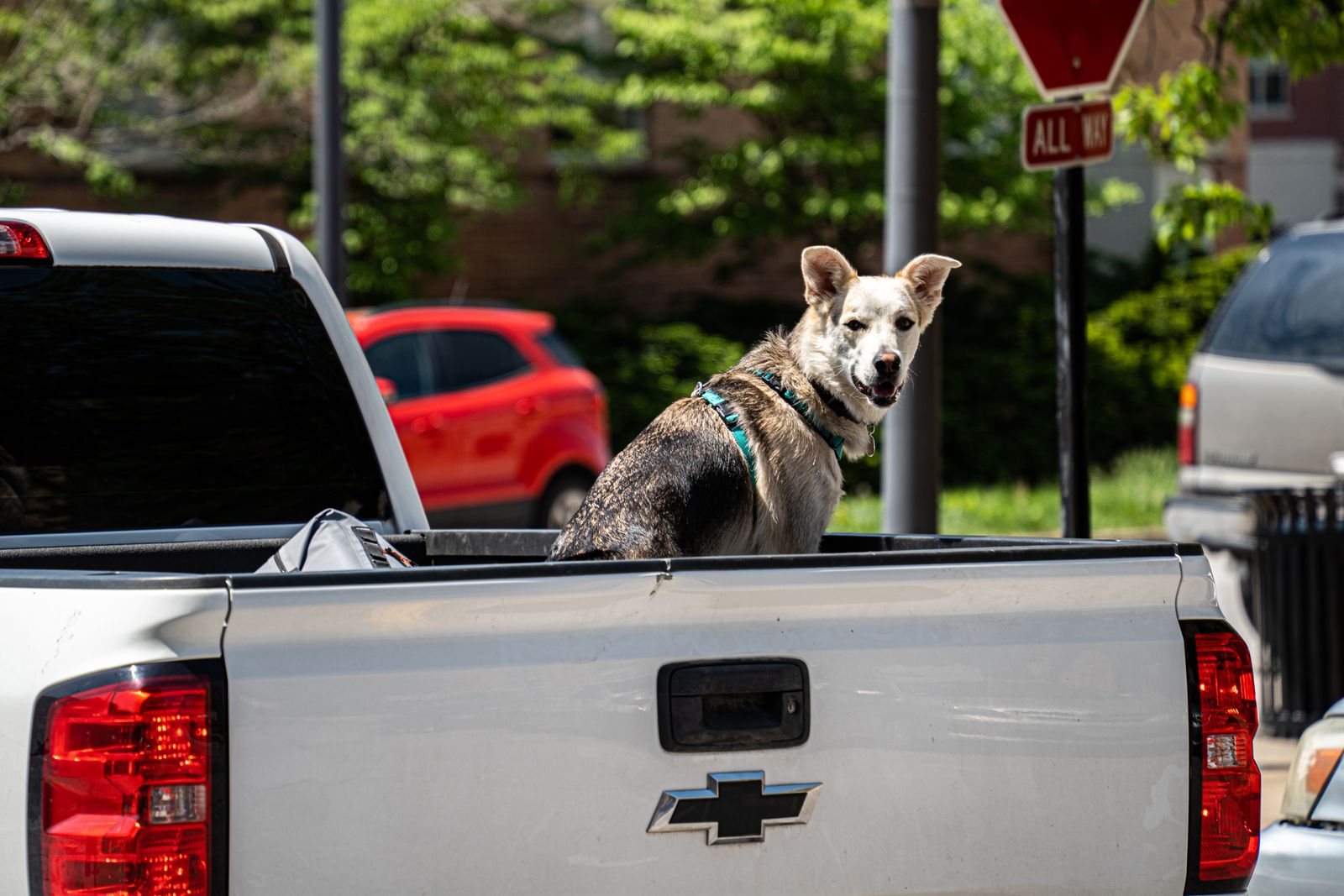
Jumping is one of the first things an aging dog should stop doing. Every leap into an SUV or onto a bed loads arthritic joints with multiples of the dog’s body weight, and one bad landing can cause a soft-tissue injury that takes weeks to heal. A ramp converts that impact into a gentle walk — and for many seniors, it’s the difference between coming along and staying home. This guide goes further than the usual spec lists: it mines verified owner reviews for what actually goes wrong, works out the incline geometry so you buy the right length, and flags the surface problem almost nobody mentions. For the complete senior-dog setup, see Essential Products for Senior Dogs and the Senior Dog Mobility Guide.
Key takeaways
- Top picks by use case: Gen7Pets Natural-Step 72” (250 lb capacity, paw-friendly poly-grass turf, gentlest incline) for cars and SUVs; PetSafe Happy Ride Telescoping (28–70”, 300 lb) for tall trucks and tight storage; Gen7Pets Mini 42” or PetSafe CozyUp for beds and couches.
- Measure your entry height and double it — that’s your minimum ramp length for a roughly 30° slope. Owners repeatedly report that 62” ramps feel “too steep” on taller vehicles.
- Surface matters more than most guides admit: the bestselling folding ramp’s sandpaper-like grit draws the most paw-comfort complaints in verified reviews (owners report abraded, bleeding paw pads); turf or carpet is kinder for arthritic seniors.
- Choose a weight rating comfortably above your dog’s weight (the 250–300 lb class for giant breeds), 16” width for most dogs, rubber feet at both ends — and train flat-to-raised with treats, never force a nervous dog.
What is the best dog ramp for a senior dog?
The best ramp is long enough to keep the incline gentle, wide enough for your dog’s body, rated well above your dog’s weight, and surfaced with real grip that doesn’t punish paw pads. By use case: the Gen7Pets Natural-Step 72” and PetSafe Happy Ride Folding suit cars and SUVs; the PetSafe telescoping aluminum ramp suits tall trucks and tight storage; the Gen7Pets Mini 42” and PetSafe CozyUp suit beds and couches. Length matters more than brand — a longer ramp is always a kinder ramp.
The shortlist, based on spec analysis plus owner-review data:
| Ramp | Length / Width | Capacity | Best for |
|---|---|---|---|
| Gen7Pets Natural-Step Ramp 72” | 72” x 16” | 250 lb | Cars/SUVs; gentlest incline, paw-friendly turf |
| PetSafe Happy Ride Folding Dog Ramp | 62” x 16” | 150 lb | Cars and SUVs; light and affordable |
| PetSafe Happy Ride Telescoping Ramp | 28–70” (adjustable) | 300 lb | Tall trucks/SUVs; highest capacity, compact storage |
| Gen7Pets Indoor-Carpet Mini Ramp 42” | 42” x 16” | 200 lb | Beds and couches; indoor use |
| PetSafe CozyUp Bed Ramp | Furniture height | 120 lb | Bedroom furniture; looks like furniture |
What hundreds of verified owners report
Before the product-by-product breakdown, here’s quantitative signal no competitor pulls: public aggregated ratings for the main ramps on this list, with the recurring themes from written reviews. These are verified-purchase ratings — owner experience, not controlled testing.
| Ramp (checked Sept 30, 2026) | Rating | Ratings | The recurring pattern in written reviews |
|---|---|---|---|
| PetSafe Happy Ride Folding 62” (Chewy) | 4.2 stars | ~1,134 | Gritty surface praised for grip but repeatedly called too abrasive on paw pads; several owners added cabinet liner or carpet |
| PetSafe Happy Ride Folding (Tractor Supply) | 4.6 stars | 113 | 95% recommend; “beware of bleeding paws” reviews flag the sandpaper surface |
| PetSafe Happy Ride Telescoping (Chewy) | 4.5 stars | ~1,218 | Praised as heavy-duty for big dogs; some owners find the slide mechanism and clips awkward |
| Gen7Pets Natural-Step 72” (Chewy) | 4.5 stars | 285 | Poly-grass turf praised as non-slip and paw-friendly; senior-lab owners report success after plastic-ramp refusals |
| Gen7Pets Natural-Step 72” (Tractor Supply) | 4.7 stars | 22 | 94% recommend; great traction and portability |
| Gen7Pets Natural-Step 72” (review aggregation) | 4.4 | ~1,411 | Pros: sturdy, good grip, helps aging dogs. Cons: too narrow for some large dogs, not long enough for trucks |
Two honest takeaways. First, the highest-reviewed car ramps sit at 4.2–4.7 stars — lower than supplement ratings, because a ramp is a physical object owners use daily and its flaws show fast. Second, the single most common complaint category is the walking surface: too abrasive on one popular model, peeling turf on another. Surface quality deserves more weight in your decision than most guides give it.
How we picked: an honest note
We have not load-tested these ramps, measured their grip, or run climb trials with real senior dogs. This shortlist comes from comparing manufacturer-published specifications — length, width, weight capacity, surface material, folded size, and ramp weight — against what actually matters for an arthritic dog, cross-checked against the verified-owner patterns above and one attributed third-party roundup cited below. Hands-on testing is planned — load tests, grip comparisons, and real climb trials — and this guide will be updated with measured results. Until then, these are spec-and-review-based starting points, not tested winners.
Measure your entry height before you buy
Almost every guide tells you to “buy a long ramp.” Almost none tells you how to calculate the length you actually need. The geometry is simple: the incline angle is determined by your vehicle’s entry height and the ramp’s length. A widely used rule of thumb is that the ramp should be at least twice as long as the entry is high — that keeps the slope at roughly 30 degrees or gentler.
| Your entry height (ground to tailgate/seat) | 62” ramp gives you | 72” ramp gives you |
|---|---|---|
| ~24” (sedan, low wagon) | ~23° — gentle | ~19° — very gentle |
| ~28” (crossover, smaller SUV) | ~27° — manageable | ~23° — gentle |
| ~32” (large SUV, truck bed) | ~31° — steep for weak dogs | ~26° — manageable |
This is exactly why verified owners keep reporting that 62” ramps feel “too steep” on some vehicles — one Chewy reviewer donated theirs because the incline was too steep for a 45-lb dog in a Kia Sorento, and wrote simply “just not long enough.” Measure from the ground to the surface your dog will step onto, double it, and that’s your minimum ramp length. If you drive a tall truck, a standard 62” folding ramp is probably the wrong product — look at telescoping options that reach 70”+ instead.
The surface problem nobody talks about
Here’s the category’s open secret: the best-selling folding ramp’s traction surface is sandpaper. That gritty texture grips well — but across Chewy and Tractor Supply reviews, verified owners repeatedly report it scraping paw pads raw, with one reviewer writing that it made paws bleed and another that it even cut their hand folding it. Multiple owners fixed it the same way: gluing down cabinet liner, yoga mat, or carpet over the grit — trading some grip for paw comfort. That hack working is useful information, but needing it is a design criticism.
The contrast is instructive. Gen7Pets’ poly-grass artificial turf surface gets the opposite feedback: senior-lab owners describe dogs refusing a plastic ramp, then walking the turf surface confidently after a week of floor-level training. Turf gives claws something to dig into without abrading pads. Carpet (indoor ramps) sits in the middle — comfortable but wrong for weather. The takeaway: for arthritic seniors with thin paw pads, prioritize turf or carpeted surfaces over grit; the marginal extra grip of sandpaper isn’t worth a dog that associates the ramp with sore feet.
What to look for in a dog ramp
Length first. See the geometry above: longer is kinder, always. For beds and couches (lower heights), 40–50” is usually enough. Measure your vehicle — don’t guess.
Width. 16 inches is the common standard and suits most dogs. Narrower ramps save storage space but unsettle wobbly seniors — a dog that feels insecure on the ramp won’t use it. Owners of large dogs do flag 16” as narrow in reviews; if your dog is broad or unsteady, prioritize the widest option you can store.
Weight capacity with margin. Choose a ramp rated comfortably above your dog’s weight — the rating should exceed it by a healthy margin, not match it. A 150-lb-rated ramp for a 140-lb dog leaves no room for a running start or a second dog following behind. For giant breeds (100+ lb), that effectively means the 250–300 lb class. And check the rating’s basis — “independently tested” (as PetSafe states for the folding ramp) is more reassuring than an unqualified number on a listing.
Surface grip — and paw comfort. High-traction textured surfaces, carpet, or artificial turf all work; smooth plastic does not. But grip and comfort are a tradeoff — see the surface section above. Side rails add confidence for nervous dogs.
Ramp weight and portability. You’ll be lifting this ramp in and out of the car regularly. Under ~15 lb is manageable for most people; 17–18 lb gets old fast. Folding or telescoping designs matter if your trunk space is tight.
Stability at both ends. Rubber feet or grippers at the ground end, and a secure rest at the top end, prevent the slide-and-scare that ruins a dog’s trust in the ramp permanently.
Ramps worth a closer look
Gen7Pets Natural-Step Ramp 72” — the gentle incline
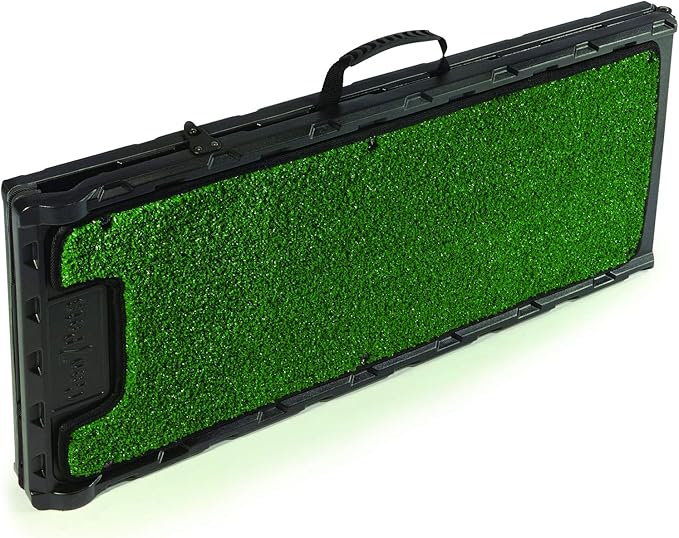
At 72” long, this is the longest mainstream car ramp, which means the gentlest slope against a vehicle — the single most important comfort factor for arthritic dogs. It’s 16” wide, rated for 250 lb, weighs about 17 lb, and folds in half to 36” with an automatic locking latch. The walking surface is poly-grass artificial turf: excellent grip that stays paw-friendly and won’t scratch your car’s interior. Rubber grippers at both ends plus a safety tether keep it planted. Reviewers confirm the real-world pattern: sturdy construction, good grip, and it helps aging dogs — while large-dog owners note the width and truck owners wish it were longer. The trade-off for the length is weight and folded size — it’s the bulkiest option here.
Worth a closer look if: your dog is nervous, heavy, or very arthritic, and you can spare the trunk space. The gentle incline is worth the bulk.
PetSafe Happy Ride Folding Dog Ramp — the affordable all-rounder, with a caveat
The standard Happy Ride is the ramp most people picture: 62” long, 16” wide, plastic construction weighing about 10 lb, folding in half with a safety latch for storage. It’s independently rated for dogs up to 150 lb, with side rails and rubber feet. It’s one of the most affordable full-size ramps — but the 150-lb capacity rules out giant breeds, and the sandpaper walking surface is the documented problem: multiple verified owners report abraded paw pads, with the common fix being an added layer of cabinet liner or yoga mat. If you buy it, budget for that modification — or for the turf-topped competitor above.
Worth a closer look if: you need a light, affordable car ramp for a small-to-large (not giant) senior, and you’re willing to pad the surface.

PetSafe Happy Ride Telescoping Ramp — for tall vehicles and tight storage
This aluminum ramp telescopes from 28” out to 70” (an extra-long version reaches 87”), collapses small enough for compact storage, and supports up to 300 lb — the highest capacity in this roundup. It weighs 14–18 lb depending on version, with a weather-resistant high-traction surface, side rails, and rubber feet. The telescoping design is genuinely convenient: one ramp that adjusts to a sedan one day and a lifted truck the next. Owners confirm it’s heavy-duty for big dogs, though some find the slide mechanism and clips awkward to operate. Aluminum costs more than plastic, and telescoping mechanisms demand occasional cleaning to slide smoothly — but for tall vehicles this is the spec leader.
Worth a closer look if: you drive a truck or tall SUV, need the highest weight capacity, or want the most compact storage.

Gen7Pets Indoor-Carpet Mini Ramp 42” — for beds and couches
Not every ramp is for the car. This 42” x 16” ramp is designed for indoor heights up to about 2 feet — beds and couches — with a carpeted surface, folding down to 21” for storage under furniture. Rated for 200 lb, it’s overbuilt for its job in the best way. Verified owners describe traveling with it and training small seniors through the flat-then-raised protocol with good results. If your senior still sleeps on your bed but hesitates at the edge, this is the category to look at rather than wrestling a 6-foot car ramp through your bedroom.
Worth a closer look if: the problem is furniture, not the car.
PetSafe CozyUp Bed Ramp — the furniture-look option
A wooden-framed ramp with a carpeted surface designed to sit permanently against a bed, rated for dogs up to 120 lb. It looks like furniture rather than equipment, which matters when the ramp lives in your bedroom full-time. The 120-lb capacity and furniture-appropriate height range mean it’s a bed-and-couch specialist, not a car-ramp substitute. If aesthetics decide whether the ramp stays out (and therefore gets used), this category exists for you.
Worth a closer look if: you want a permanent indoor ramp that doesn’t look like garage equipment.

What other publications pick
In The Goody Pet’s 2026 roundup of ramps for cars, SUVs, and trucks, the publication’s own top pick was the Pet Gear Free-Standing Extra-Wide Pet Ramp — 55” long by 19.25” wide, freestanding, with a supertraX treaded surface designed to trap dirt and clean easily, rubber grippers, and raised edges. We haven’t evaluated it against the list above; we’re reporting their pick as theirs, not ours. It illustrates the same themes this guide emphasizes: width, grip, and stability matter more than brand name.
When a ramp isn’t enough
Honest boundary: a ramp helps a dog that can still walk but shouldn’t jump. It doesn’t help a dog whose rear legs can’t support a climb at all. If your senior physically cannot manage even a gentle incline — watch for the hind-end buckling or the refusal that training doesn’t fix — a ramp is the wrong tool, and the kindest options shift to support gear and a vet conversation about what’s behind the weakness. Our Senior Dog Mobility Guide covers the full range of mobility support, and our pain-signs guide (how to tell if your senior dog is in pain) helps you read what the refusal means.
How to train a senior dog to use a ramp
Most ramp failures are training failures, not product failures. Go slowly:
- Start flat. Lay the ramp on the ground and let your dog walk across it for treats. No incline, no pressure, several sessions.
- Raise it slightly. Prop one end on a low step or curb. Treat every crossing generously.
- Go to full height. Move to the car or couch only when the low incline is boring. One verified owner described exactly this progression — floor, then a chair, then the SUV — and wrote “DON’T skip that process.”
- Never force it. One bad scare — a slip, a shove — can end ramp use permanently. If your dog balks, drop back a step.
- Keep the surface clean. Mud, wet paws, and worn turf all reduce grip. A ramp your dog slips on once becomes furniture.
Older dogs with cognitive decline may need more repetitions and higher-value treats; patience is the method.
Care, storage, and maintenance
Car ramps live a rough life — rain, mud, trunk heat, daily setup. A few habits extend a ramp’s life and your dog’s trust in it: rinse grit and mud off the walking surface regularly (embedded grit is what makes sandpaper-style surfaces worse over time); check folding latches and telescoping slides for sand and grit that makes them stick; store the ramp indoors and dry, not permanently in a hot trunk — heat and UV age plastic and turf; and inspect the surface seasonally for worn spots, peeling turf edges, or loose carpeting, all of which change the grip your dog learned to trust. Don’t use an indoor carpeted ramp as your car ramp: it will soak up weather and wear out fast. If you need both, they’re different purchases — budget for two.
Frequently asked questions
Are ramps or stairs better for senior dogs?
Ramps, for most arthritic seniors — they eliminate the step-up impact that hurts sore joints, spreading the effort across a continuous gentle slope. Stairs still require lifting the body up step by step. Stairs only win where space is too tight for a ramp’s length, or for small dogs in good joint shape.
How long should a dog ramp be?
Measure your entry height (ground to tailgate or seat) and double it — that’s your minimum ramp length for a roughly 30-degree slope. For most cars and SUVs, 60–72” keeps the incline gentle; for beds and couches, 40–50” is usually enough. Taller entry needs a longer ramp for the same slope.
Can a ramp hold a large dog?
Yes, if you buy for capacity. The ramps above range from 150 lb to 300 lb rated capacity. Match the rating to your dog with margin to spare, and check whether the rating is independently tested. For giant breeds, that effectively means the 250–300 lb class.
My dog is afraid of the ramp. What now?
Drop back to flat-ground training with high-value treats, and check the surface — slipping is the most common cause of ramp fear, and an abrasive surface is the second. Some dogs do better with carpet or turf surfaces than grit-textured plastic. Never force or carry a scared dog up a ramp.
Do I still need a ramp if my dog can still jump?
If your dog is a senior, yes — “can” isn’t “should.” Repetitive jumping accelerates joint wear, and one bad landing can cause an injury that ends mobility for weeks. A ramp is prevention, not surrender. Pair it with the rest of the plan: an orthopedic bed and lean body weight matter just as much.
What about ramps for stairs in the house?
Long ramps work for a few porch steps, but a full staircase is usually impractical — the ramp would need to be extremely long to stay gentle. For multi-step indoor stairs, baby gates plus carrying (for small dogs) are the realistic options; for large dogs, discuss support options with your vet.
What’s the best surface for a dog ramp?
For senior dogs, poly-grass turf or carpet: both give claws grip without abrading paw pads. Grit/sandpaper surfaces grip well but draw the most paw-comfort complaints in verified reviews. Smooth plastic is the one to avoid — it’s slippery for dogs with weak rear legs or long nails.
We’ll update this guide with load tests, grip comparisons, and real senior-dog climb trials once our testing program begins. For the complete senior-dog setup, see Essential Products for Senior Dogs and the Senior Dog Mobility Guide.