
Best Dog Food for French Bulldogs: Allergies, Gas & Skin
The best dog food for a French Bulldog is a complete and balanced food for the dog’s life stage that your Frenchie digests well, eats without gulping, and stays lean on. No single brand wins for every Frenchie, because this breed is known for touchy stomachs, skin trouble and a flat face that changes how it eats. This guide covers how to choose, what the research does and does not say, and foods worth considering for gas, skin and weight.
A note on how this page is written: it is research-based. We have not run feeding trials, and the product notes below come from the manufacturers’ stated formulas, retailer listings and general veterinary guidance, not from personal testing. We do not quote ratings or prices because they change.
Key takeaways
- Choose a food with an AAFCO “complete and balanced” statement for your dog’s life stage (growth, adult maintenance, or all life stages). A breed name or a picture of a Frenchie on the bag is marketing; the statement is the part that counts.
- Digestibility matters more than fancy ingredients. Frenchies are often described as gassy, and part of that is swallowed air from a short muzzle, which a food cannot fix. Slower eating helps as much as the recipe.
- A large UK veterinary records study found French Bulldogs were diagnosed with skin, ear and food-hypersensitivity problems far more often than other dogs. Persistent itching or ear trouble is a reason to see your vet, not to hop between brands.
- VCA says the breed has a decided tendency to be overweight. Measure meals, count treats, and learn to feel your dog’s ribs.
- Puppies, adults and seniors need different foods. Switch gradually over about a week, and ask your vet before changing a senior’s diet if there is any health condition.
- Foods worth considering below are from established brands. Discuss any big change with your vet, especially for a dog with a diagnosed condition.
What does a French Bulldog need from its food?
Four traits shape the choice.
A flat face and a particular bite. French Bulldogs are brachycephalic, meaning short-muzzled. Some manufacturers make breed-specific kibble shaped for that jaw. Royal Canin, for example, says its French Bulldog formulas use a curved kibble designed for the breed’s short muzzle and underbite. That is the company’s claim, and many Frenchies do fine on ordinary kibble. What matters is that your dog can pick the pieces up and chew rather than inhale them.
Swallowed air. VCA’s breed profile says the Frenchie is extremely prone to overheating because of its flat face. Flat-faced dogs also tend to swallow air when they gulp food, which is a common explanation for their gas. Our Boston Terrier guide goes deeper on this, since Bostons share the same issue, and the advice about slow-feeder bowls applies equally to Frenchies.
A tendency to gain weight. VCA’s French Bulldog profile says the breed has “a decided tendency to be overweight” and advises restricting calories if a dog starts to gain too much. Extra weight is a particular problem for a dog that already struggles with breathing and heat.
Skin, ear and stomach sensitivity. More on this below. It is the biggest reason Frenchie owners go searching for a new food.
What does the research say about French Bulldog health and food?
There is less breed-specific nutrition research than owners assume, so it is worth being precise.
A 2021 study from the Royal Veterinary College, published in Canine Medicine and Genetics (O’Neill and colleagues, VetCompass), compared the veterinary records of 2,781 French Bulldogs with 21,850 other dogs in the UK. Among its findings:
- French Bulldogs had much higher odds of skin fold dermatitis, ear discharge, and a general skin disorder diagnosis.
- Food hypersensitivity was recorded in 1.9% of the Frenchies versus 0.3% of other dogs, a roughly seven-fold difference in odds.
- Gastroenteritis was recorded more often in Frenchies (3.3% versus 1.3%), while diarrhea as a separate diagnosis was not significantly different.
- Obesity was recorded less often in Frenchies (1.3% versus 7.2%), which seems to conflict with VCA’s “tendency to be overweight.” The authors suggest vets may be better at spotting obesity in some other breeds than in this one, though that is speculation.
Two cautions. This is a records study, so it shows what vets diagnosed, not what causes it. And the authors describe the individual findings as hypothesis-generating. The study did not look at which foods the dogs ate. Treat it as a reason to take skin and stomach signs seriously, not as proof that any food prevents them.
How to choose a French Bulldog food
Read the adequacy statement, not just the ingredients
The Association of American Feed Control Officials (AAFCO) sets nutrient profiles that pet food labels refer to. As AAFCO’s label guidance explains, a “complete and balanced” claim names a life stage (growth, maintenance, or all life stages) and says either that the food was formulated to meet the profiles or that feeding tests support it. AAFCO also notes that it does not approve or certify pet foods, so the statement is a minimum standard, not a quality award.
The WSAVA Global Nutrition Guidelines page makes a related point: the ingredient list does not show ingredient quality and can be misleading on its own.
Look for a manufacturer that can answer questions
WSAVA’s guidance encourages owners to look at the company behind the food. Brands that employ qualified nutritionists and can tell you where the food is made are a safer bet than those that cannot.
Pick a digestible recipe
Look for a named protein source, moderate fat, and some prebiotic fiber. If your dog already has loose stools or gas, avoid very rich, high-fat formulas and keep treats simple. Our less-poop guide explains digestibility in more detail.
Check kibble size and shape
Medium kibble is fine for most Frenchies. If your dog gulps, drops pieces, or pushes food around the bowl, try a different shape or a slow-feeder bowl before blaming the recipe.
Check the calories
Calories per cup vary a lot between foods. A food that is calorie-dense is easy to overfeed in a compact dog. Compare the “kcal per cup” figure on the bag when you switch, and adjust the scoop.
Foods worth considering
How we picked: These are widely available foods from established brands that fit the needs above on paper. We have not tested them ourselves, so we do not rank them or promise results. Check the current ingredient panel and adequacy statement, and confirm the choice with your vet.
Royal Canin Breed Health Nutrition French Bulldog Adult. A breed-specific formula for French Bulldogs 12 months and older, with a curved kibble shaped for the breed’s muzzle. Royal Canin’s listing says it uses highly digestible proteins and controlled fiber to reduce gas and stool odor and adds nutrients meant to support the skin barrier. These are the manufacturer’s claims. It is a reasonable first food to try for a healthy adult Frenchie if the kibble shape helps your dog eat more slowly.
Hill’s Science Diet Adult Sensitive Stomach & Skin. A digestibility-focused recipe with prebiotic fiber, plus vitamin E and omega-6 fatty acids for skin and coat. Hill’s markets it for dogs prone to occasional digestive upsets and skin sensitivity. The common chicken recipe lists chicken as a main ingredient, so it is not the right pick if your vet suspects a chicken allergy.
Purina Pro Plan Sensitive Skin & Stomach (Salmon & Rice). A salmon-first recipe with rice and oatmeal, prebiotic fiber, and no corn, wheat or soy according to retailer listings. Some Purina listings mention guaranteed live probiotics, so check the bag for the exact claim. A good option for Frenchies that need a non-chicken protein, though salmon is still a single protein, not a diagnosis-proof diet.
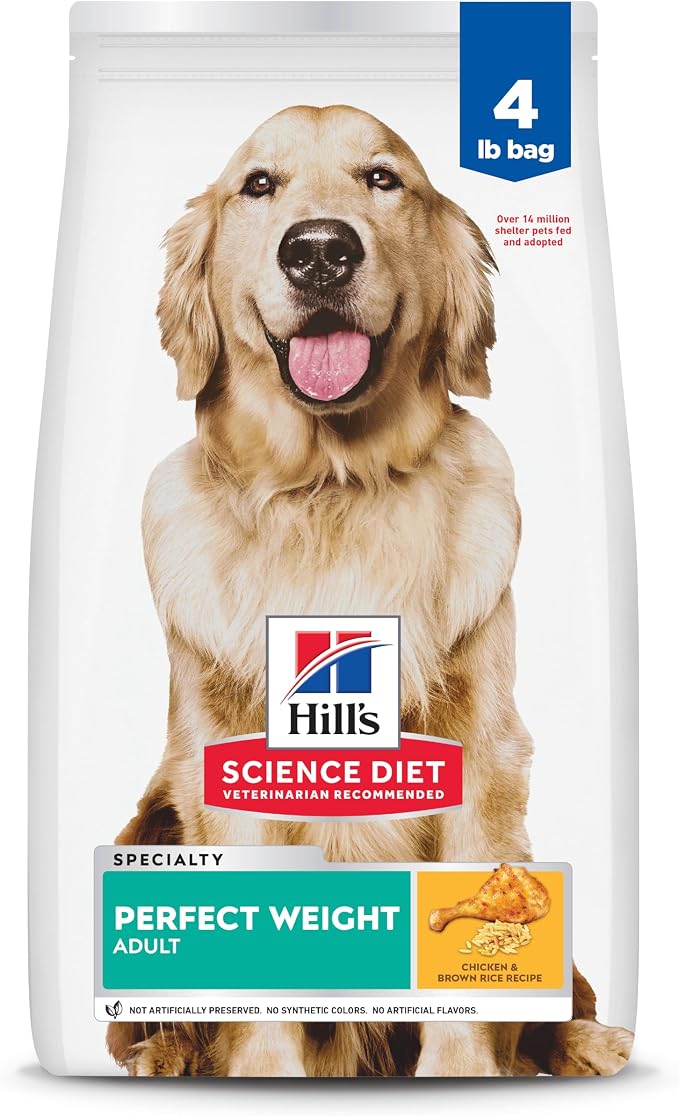
Hill’s Science Diet Adult Perfect Weight. A weight-management formula that uses higher fiber to help a dog feel full while keeping protein up for lean muscle. A sensible over-the-counter step for an overweight Frenchie once your vet has confirmed the target weight.
Royal Canin Breed Health Nutrition French Bulldog Puppy. For purebred Frenchie puppies from 8 weeks to 12 months, with the same curved kibble idea as the adult formula and added antioxidants and vitamin E for immune development, according to the listing. If you choose a different puppy food, make sure it carries a growth or all-life-stages adequacy statement.
For related stocky-breed shortlists, see our Boston Terrier guide and American Bully guide, and the senior dog food guide covers formulas for later life.
Best food for a French Bulldog with gas
Gas in Frenchies has two sources, and you can work on both.
Air. Short-muzzled dogs swallow air, especially when they eat fast or when they are excited. Try a slow-feeder or puzzle bowl, smaller meals more often, a calm feeding spot, and no exercise right before or after meals.
Fermentation. Poorly digested food ferments in the gut. A highly digestible recipe, steady meals, and a strict limit on table scraps, dairy and fatty treats usually do more than any “anti-gas” product.
Change one thing at a time so you know what worked. Switch foods gradually over about a week by mixing the new food into the old. See your vet for gas that comes with vomiting, a bloated or painful belly, bloody stools, or appetite loss. Those are not ordinary Frenchie gas.
Best food for French Bulldog allergies and itchy skin
Itchy skin, red paws, ear infections and skin-fold trouble are common complaints in the breed, as the VetCompass study above shows. Here is the honest picture:
- Not every itch is a food allergy. Environmental allergies, skin-fold infections, yeast and parasites are all common causes. Skin fold dermatitis in particular is about hygiene and moisture, not food. VCA advises examining, cleaning and drying facial and tail-pocket wrinkles daily.
- Food allergy is diagnosed with a diet trial. According to VCA’s food allergy information, the most accurate method is feeding a hypoallergenic diet for 8 to 12 weeks, with no other foods, treats or flavored supplements, then reintroducing the old food to see if signs return. Randomly switching brands every few weeks cannot give you that answer.
- Do it with your vet. A proper trial usually uses a prescription or carefully chosen novel-protein diet. Our allergies and yeast guide explains the process and the foods vets often use.
- Grain-free is not an allergy cure. Most food allergies in dogs involve proteins. The FDA’s investigation of a possible link between some grain-free diets and heart disease (dilated cardiomyopathy) is still described by the agency as unresolved, with no causal link established. Ask your vet before choosing a grain-free food.
Weight control for a flat-faced dog
Extra weight makes breathing harder and heat tolerance worse, so keeping a Frenchie lean is one of the most useful things you can do with food.
- Weigh regularly. A bathroom scale works: weigh yourself holding the dog, then subtract.
- Measure every meal. Use a proper measuring cup or kitchen scale, not a scoop from the bag.
- Count treats. Use small pieces, or take part of the daily kibble for training.
- Feel the ribs. VCA’s body condition scoring guide describes the hands-on check: a dog at a healthy weight has ribs you can feel without pressing hard. If you need firm pressure to find them, ask your vet about a target weight and calorie amount.
- Do not crash diet. Weight loss should be gradual and guided by your vet.
Puppy, adult and senior French Bulldogs
Puppies. Feed a food with a growth or all-life-stages adequacy statement. Puppies need frequent small meals, usually three or four a day, and the right amounts are on the bag and from your vet. Weigh and adjust as they grow, because a chubby puppy is not a healthy one.
Adults. Most Frenchies do well on two measured meals a day of a food labeled for adult maintenance. Adjust by body condition, not by what the scoop suggests.
Seniors. There is no fixed senior age for Frenchies, so go by the individual dog and your vet’s advice. Signs it is time to review the diet include weight changes, reduced appetite, stiffness, bad breath or new health conditions. Senior formulas generally lower calories while keeping protein quality up, but a dog that is losing weight needs a vet visit, not a diet food. Soaking kibble in warm water or adding a spoonful of a matching wet food can help a sore mouth. Our senior dog food guide compares formulas for later life, and the senior nutrition guide covers hydration, supplements and vet check timing.
When moving between life stages, switch gradually over about a week, mixing the new food into the old a little more each day.
How much to feed a French Bulldog
There is no single right amount. Start with the feeding guide on the bag for your dog’s ideal weight, then adjust by body condition and your vet’s advice. Most adults do well on two measured meals a day, and puppies need more. Count treats and chews as part of the day’s food. If your dog is losing weight without trying, gaining quickly, or regularly leaving meals, see your vet before changing amounts.
Foods to avoid
- Xylitol. VCA calls xylitol highly poisonous to dogs: small amounts can cause dangerous low blood sugar and seizures, and larger amounts can cause liver failure. It turns up in sugar-free gum, some peanut butters and baked goods. Call a vet or poison helpline right away if your dog may have eaten any.
- Chocolate, grapes and raisins, onions, garlic and chives, macadamia nuts, alcohol, and raw yeast dough. The ASPCA’s list of foods to avoid covers these and the reasons why. ASPCA Poison Control is at (888) 426-4435.
- Fatty table scraps and dairy. Rich human food and dairy commonly upset dogs’ stomachs.
- Hard chews and bones. Choking and tooth-fracture risks are higher in a short-jawed dog.
- Constant menu changes. Rotating foods often invites stomach upset and makes it impossible to tell what is causing a problem.
Not sure how much to feed? Our free dog calorie calculator turns your dog’s weight and the kcal per cup on the bag into cups per day.
FAQ
What is the best dog food for a French Bulldog?
There is no single best food. Choose a complete and balanced food for your dog’s life stage that your Frenchie digests well, measure portions, and confirm the choice with your vet. The foods above are a starting shortlist, not a ranking.
What should I feed a French Bulldog with a sensitive stomach?
Start with a digestible recipe with a named protein and prebiotic fiber, feed it in measured meals, and cut back on treats and table food. Switch gradually over about a week. If soft stools, vomiting or gas continue for more than a few days, see your vet before trying more foods.
Why is my French Bulldog so gassy?
Two main reasons: swallowed air, because of the short muzzle and fast eating, and fermentation of food that is not fully digested. A slow-feeder bowl, smaller meals and a more digestible food can help. Sudden severe gas with a bloated belly, retching or lethargy needs a vet right away.
Are French Bulldogs allergic to chicken?
Not all of them. A UK veterinary records study found food hypersensitivity was recorded more often in French Bulldogs than in other dogs, but it did not say which ingredients were responsible. Food allergies in dogs usually involve a protein, but only a vet-guided elimination trial can show what your dog reacts to.
Is grain-free food better for French Bulldogs?
No evidence we found says it is. Most food allergies in dogs involve proteins, not grains. The FDA has investigated a possible link between some grain-free diets and heart disease without establishing a cause, so talk to your vet before choosing one.
How much should a French Bulldog eat?
It depends on the food, age, activity and body condition. Use the bag’s feeding guide for the dog’s ideal weight as a starting point, then adjust with your vet. VCA notes the breed tends toward being overweight, so measure carefully.
Can French Bulldogs eat puppy food as adults?
Puppy food is higher in calories and built for growth, so it is a poor fit for most adult Frenchies, and the breed gains weight easily. Move to an adult maintenance or all-life-stages food when your vet says your puppy is ready.
The bottom line
For a French Bulldog, the basics do most of the work: a complete and balanced food for the right life stage, a recipe your dog digests well, a slower way of eating, and measured portions that keep the ribs easy to feel. Do not expect a food to fix itchy skin or constant gas without a vet’s help, and do not ignore changes in appetite or weight. Start with the shortlist above, read our Boston Terrier guide for the shared flat-face tips, and use the senior dog nutrition guide when your Frenchie reaches later life.